

Midlife often arrives quietly, then all at once. You wake up one day realizing the routines that once felt steady now feel restrictive, and the place you live may be reinforcing habits you’ve outgrown. For many people, making a move during this stage isn’t about escape—it’s about choosing alignment between how you live, work, and spend your energy.
Key Takeaways
- A midlife move can interrupt routine and create space to realign lifestyle, career, and personal priorities
- Relocating with intention often improves daily habits, social connections, and overall well-being
- Career shifts frequently pair well with relocation, especially when stagnation or burnout is present
- Choosing the right home and neighborhood matters more at midlife than sheer size or prestige
- Thoughtful planning around finances, housing, and timing turns a move into a reset rather than a risk
What This Shift Can Unlock
Here are the core benefits people report after making a well-planned midlife move:
- Renewed motivation as daily environments better support current values
- Improved work-life balance through shorter commutes or remote-friendly locations
- Stronger social ties formed around shared interests rather than long-standing obligation
- Financial clarity from resizing housing or adjusting cost of living
- A sense of agency that comes from choosing, not drifting
Rethinking Your Career as Part of the Move
Career change often travels alongside relocation, and for good reason. When work begins to feel stagnant, a new role—or an entirely new direction—can reignite curiosity and purpose. Shifting careers during midlife isn’t about starting over; it’s about redirecting accumulated experience toward something more meaningful.
Employment University of Phoenix research shows that rising burnout and dissatisfaction are colliding with employers’ increased reliance on external hiring instead of developing internal talent. As these dynamics widen skills gaps and limit advancement opportunities, many professionals take ownership of their growth by making bold changes. A proactive transition—supported by education and planning—can lead to improved well-being and long-term satisfaction.
How to Choose a Home That Supports Your Next Chapter
Before you fall in love with a listing, anchor the decision in lifestyle needs. Here are some tips for evaluating homes through a midlife lens:
- Define non-negotiables such as walkability, noise level, and access to nature
- Assess whether the layout supports current and future mobility
- Consider proximity to healthcare, not just amenities
- Evaluate maintenance demands against desired free time
- Review long-term affordability under conservative income assumptions
Neighborhoods Matter More Than Square Footage
A house can feel perfect and still be wrong if the surrounding area doesn’t support your goals. Community shapes behavior more than most people expect, especially during transitions.
The table below outlines how different neighborhood traits can reinforce specific midlife priorities.
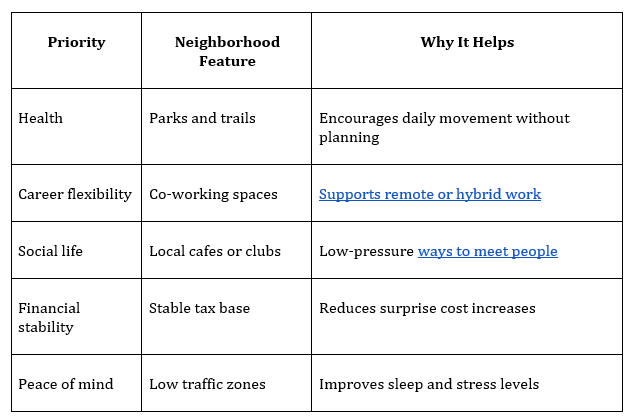
* Supports remote or hybrid work
* Low-pressure ways to meet people
The Practical Side of Selling and Buying Midlife
Timing matters. Many midlife movers benefit from selling first to simplify financing and reduce risk, especially if income may change. Downsizing can free capital for retraining, travel, or simply breathing room.
It’s also wise to work with professionals who understand transitional buyers—those not chasing maximum size or school districts, but livability and longevity.
Questions People Ask When They’re Ready to Commit
The answers below address common decision points with clarity and realism.
Should I move before or after a career change?
It depends on income stability and local job markets. Moving first can create mental space but may increase short-term financial pressure. Many people reduce risk by securing remote work or training before relocating.
Is renting first a smart option at midlife?
Yes, especially in unfamiliar areas. Renting allows you to test neighborhoods and routines without locking into a long-term commitment. It often leads to better buying decisions later.
How do I know if this is growth or avoidance?
Growth-driven moves are intentional and values-based. Avoidance tends to be reactive and vague. Writing down what you want your days to look like can clarify the difference.
What if the move doesn’t fix everything?
No move solves internal issues on its own. However, the right environment can support healthier choices and make change more sustainable. Expect improvement, not perfection.
How much financial cushion is enough?
Most advisors recommend six to twelve months of living expenses. This buffer is especially important if work or income may shift. Security reduces decision stress.
Will I regret leaving familiarity behind?
Nostalgia is normal, but regret is less common than expected. Many people maintain old ties while building new ones. Familiarity can be recreated; time cannot.
Conclusion
A midlife move isn’t about reinvention for its own sake. It’s about aligning place, work, and values so daily life feels intentional again. With realistic planning and clear priorities, relocation can become a powerful tool for shaping the next chapter. Sometimes, the bravest step isn’t starting over—it’s choosing differently.
Guest post by Alice Robertson